Why Is There So Much Dust in My House Even After Cleaning?
If you constantly find dust on your furniture, floors, and surfaces just days after cleaning, you may be wondering, “Why is my house so dusty?” Regular cleaning can remove visible dust, but it does not always address the source.
In Texas homes, dust can be especially noticeable because of dry conditions, pollen, outdoor particles, frequent HVAC use, and poor filtration. Your heating and cooling system plays an important role in your home’s air quality. Problems with filters, ductwork, humidity, or ventilation can allow airborne particles to circulate throughout your home.
Understanding the causes of excessive dust can help you find a long-term solution instead of constantly cleaning the same surfaces.
What Causes So Much Dust in a House?
There isn’t always one reason for excessive household dust. Several factors can contribute to the problem.
1. A Dirty or Low-Quality HVAC Filter
Your HVAC filter is designed to capture airborne particles before they circulate through your home. If the filter is dirty, clogged, damaged, or not designed to capture smaller particles, more dust can remain in the air.
Replacing your filter regularly is one of the simplest ways to improve indoor air quality in Texas homes.
The right filter depends on your HVAC system. A higher-efficiency filter can capture more particles, but your system must be able to handle it without restricting airflow.
2. Leaky or Dirty Air Ducts
Your ductwork carries conditioned air throughout your home. If ducts have leaks, gaps, or damaged connections, they can allow dust and other particles to enter the system.
Professional duct inspection can determine whether your system has leaks or other problems contributing to excessive dust.
If you are searching for air duct cleaning indoor air quality solutions, remember that cleaning alone may not solve the problem if the underlying issue is damaged or leaking ductwork.
3. Too Much Outdoor Dust Entering Your Home
Texas homes can be exposed to significant amounts of outdoor dust, pollen, and other airborne particles. Open doors and windows, gaps around doors, and poor ventilation can allow these particles indoors.
Improving your home’s filtration and sealing obvious air leaks can help reduce the amount of outdoor debris entering your living space.
4. Improper Humidity Levels
Humidity can also affect how particles behave inside your home. Excessive moisture can contribute to conditions favorable to mold growth, while very dry air can allow some particles to remain airborne more easily.
Learning how to reduce indoor humidity in Texas can be particularly useful during hot and humid periods.
For homes with persistent humidity problems, whole house dehumidifier Texas solutions can provide more consistent moisture control than portable units.
How Can I Improve Indoor Air Quality?
If you’re looking for how to improve indoor air quality, start with the basics.
Change Your HVAC Filter Regularly
A clean filter helps your HVAC system capture airborne particles. Check your manufacturer’s recommendations and inspect the filter regularly, especially during periods of heavy heating or cooling.
For homeowners researching best HVAC filter for indoor air quality, the goal isn’t simply to choose the highest MERV rating available. The filter should be compatible with your HVAC equipment and provide appropriate airflow.
A MERV 13 filter for home applications can provide strong particle filtration when the HVAC system is designed to handle it.
Keep Your Home Clean
Vacuuming carpets, rugs, and upholstered furniture can help remove accumulated dust. Using a vacuum with effective filtration can also help prevent captured particles from being redistributed into the air.
Regularly wash bedding, clean vents, and dust surfaces using methods that capture dust instead of simply moving it around.
If you’re wondering how to reduce dust in your home, combine regular cleaning with HVAC maintenance rather than relying on cleaning alone.
Improve Filtration
A properly selected air filtration system for home use can help capture airborne particles before they circulate throughout your living spaces.
Depending on your home’s needs, you may also consider a dedicated whole house air purifier Texas homeowners can integrate with their HVAC system.
Could Your HVAC System Be Affecting Air Quality?
Your heating and cooling system does more than control temperature. It can have a significant impact on HVAC air quality.
If your system has poor filtration, dirty components, leaking ducts, or inadequate airflow, it may contribute to recurring dust problems.
Homeowners looking for indoor air quality solutions should consider having the complete HVAC system evaluated rather than immediately replacing individual components.
Professional HVAC technicians can inspect filters, ductwork, airflow, indoor coils, and other components that may affect air circulation.
What About Allergies and Indoor Dust?
Dust can contain various particles, including pollen, pet dander, and other allergens. For people sensitive to airborne particles, improving filtration and reducing dust accumulation may help create a more comfortable indoor environment.
There is a strong connection between indoor air quality and allergies, which is why maintaining clean filters and reducing airborne particles is an important part of maintaining a comfortable home.
If you notice persistent moisture or musty odors, you should also investigate potential sources of mold and indoor air quality problems.
Can an Air Purifier Help With Dust?
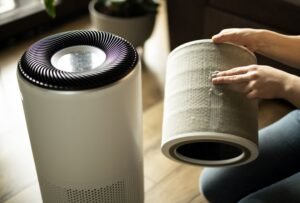
A properly selected air purifier can help capture airborne particles that circulate through your home.
A best air purifier for home Texas homeowners will depend on factors such as home size, HVAC configuration, filtration needs, and the types of particles you are trying to reduce.
For larger homes, a whole-home system may provide more comprehensive filtration than relying exclusively on a small portable purifier.
Another option homeowners sometimes consider is a UV air purifier HVAC system. UV technology is different from particle filtration, so it should be selected based on the specific air-quality concern and HVAC setup.
Don’t Forget About Ventilation
Ventilation is another important part of maintaining indoor air quality Texas homeowners can focus on.
Your home needs appropriate ventilation to help manage indoor pollutants and maintain comfortable conditions. However, simply opening windows isn’t always practical in Texas because outdoor heat, humidity, pollen, and other particles can enter the home.
A professional can evaluate your HVAC system and discuss appropriate ventilation and filtration options.
When Should You Call an HVAC Professional?
If you’ve cleaned your home thoroughly but dust keeps returning quickly, it may be time to have your HVAC system inspected.
Consider contacting a professional if you notice:
- Excessive dust shortly after cleaning
- Dirty HVAC filters that become clogged quickly
- Visible dust around supply vents
- Poor or inconsistent airflow
- Musty odors
- Excessive indoor humidity
- Persistent allergy symptoms
- Suspected duct leaks
- HVAC performance problems
Chrome Air Conditioning can help identify HVAC-related factors that may be contributing to excessive dust and poor indoor air quality.
Final Thoughts
If your home becomes dusty soon after cleaning, the solution may involve more than simply cleaning more often. Your HVAC filter, ductwork, humidity levels, ventilation, and overall filtration can all affect the amount of dust circulating indoors.
Start with simple steps such as changing your filter, cleaning regularly, controlling humidity, and checking your ductwork. If the problem continues, a professional HVAC inspection can help identify the underlying cause.
Chrome Air Conditioning is here to help Texas homeowners maintain comfortable homes and address HVAC and air-quality concerns.
Chrome Heating & Air Conditioning | Plano, TX
Call 469-252-0599 for professional HVAC assistance.