Why Is My AC Using So Much Electricity? 10 Possible Reasons
If you’ve noticed that your electricity bill has suddenly increased, your air conditioner may be one of the biggest reasons. Understanding why is my AC using so much electricity can help you identify problems before they lead to even higher energy costs or expensive repairs.
An AC system naturally uses a significant amount of electricity, especially during hot Texas summers. However, unusually high energy consumption can indicate an efficiency problem. From dirty filters and low refrigerant to an aging system, several issues can cause an air conditioner to work harder than necessary.
Here are 10 possible reasons your AC may be consuming more electricity than it should.
1. Your AC Filter Is Dirty
One of the simplest explanations for AC using too much electricity is a clogged or dirty air filter.
When the filter becomes packed with dust and debris, air cannot move freely through the system. Your AC may then run longer to reach the thermostat’s temperature setting.
Many homeowners wonder, does a dirty AC filter increase electricity bill? Yes. A restricted airflow can make your system work harder and may increase energy consumption.
Check your filter regularly and replace it according to the manufacturer’s recommendations.
2. Your AC Is Running Constantly
If your system seems to run almost nonstop, you may notice an AC running constantly high electric bill situation.
But why does my AC run constantly? Several problems can cause excessive runtime, including poor airflow, low refrigerant, inadequate insulation, an undersized system, or extreme outdoor temperatures.
A properly maintained AC should cycle on and off as needed. If it runs continuously without adequately cooling your home, professional troubleshooting may be necessary.
3. Low Refrigerant Can Increase Energy Use
Refrigerant is essential for removing heat from your home. If the system has a refrigerant leak or an incorrect refrigerant charge, it may struggle to cool effectively.
This can lead to the common question, does low refrigerant increase electricity consumption? It can. An AC that cannot transfer heat efficiently may operate for longer periods while consuming more energy.
Other signs can include warm air from the vents, ice on the indoor or outdoor unit, and unusually long cooling cycles.
4. Dirty Evaporator or Condenser Coils
Your AC’s coils play an important role in transferring heat. When dirt accumulates on the evaporator or condenser coils, heat transfer can become less efficient.
The system may then need to work harder and run longer.
Regular professional maintenance can help keep these components clean and allow your air conditioner to operate more efficiently.
5. Your AC Is Old and Losing Efficiency
If you have an older air conditioner, it may naturally consume more electricity than a newer, high-efficiency system.
Many homeowners ask, does an old AC use more electricity? In many cases, yes. Older equipment can have lower efficiency ratings, aging components, and reduced performance.
If your AC requires frequent repairs and your energy bills continue increasing, comparing repair costs with replacement options may make sense.
6. Your AC May Be the Wrong Size
An improperly sized air conditioner can also contribute to high energy consumption.
An oversized system may cool the space quickly but cycle too frequently, while an undersized system may run for long periods without keeping the home comfortable.
Proper sizing considers factors such as home size, insulation, windows, occupancy, and local climate—not just square footage.
7. Poor Insulation Is Making Your AC Work Harder
Your air conditioner cannot efficiently cool your home if conditioned air is constantly escaping.
Poor attic insulation, air leaks around windows and doors, and inadequate insulation in other areas can allow heat into your home.
The result may be longer AC cycles and higher energy consumption.
If you’re searching how to reduce AC electricity consumption, improving your home’s insulation and sealing air leaks can be an important part of the solution.
8. Your Thermostat Settings May Be Increasing Energy Use
Thermostat settings can have a major effect on energy consumption.
Setting your AC extremely low does not necessarily make the system cool your home faster. Instead, it can cause the system to operate for longer periods.
Using a programmable or smart thermostat can help maintain more consistent temperatures and reduce unnecessary cooling when nobody is home.
9. Your AC Needs Professional Maintenance
Skipping routine maintenance can gradually reduce AC efficiency.
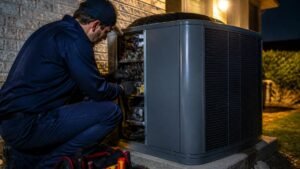
During a professional tune-up, an HVAC technician can inspect important components, check electrical connections, examine refrigerant levels, clean certain components, and identify potential problems.
Routine maintenance can help prevent small issues from developing into expensive repairs while helping your system operate efficiently.
10. Your AC May Simply Be Working Too Hard During Extreme Heat
During very hot weather, your air conditioner naturally has to work harder to remove heat from your home.
This can increase AC electricity consumption, particularly when outdoor temperatures remain high for extended periods.
However, if your system suddenly consumes much more electricity than usual, struggles to maintain the thermostat setting, or runs continuously, there may be an underlying mechanical or airflow problem.
How to Reduce Your AC Electricity Bill
If you’re searching how to reduce AC electricity bill or how to lower AC electric bill, start with simple efficiency improvements:
- Replace dirty air filters regularly.
- Keep supply and return vents unobstructed.
- Use reasonable thermostat settings.
- Schedule regular AC maintenance.
- Improve insulation and seal obvious air leaks.
- Keep outdoor AC equipment clear of excessive debris.
- Consider upgrading an aging, inefficient system.
- Use a programmable or smart thermostat.
- Have refrigerant and electrical problems professionally inspected.
You can also monitor your monthly energy usage. A sudden increase can help you identify when an AC problem may have started.
How Much Electricity Does an AC Use?
How much electricity does an AC use? It depends on several factors, including the system’s size, efficiency rating, outdoor temperature, thermostat setting, runtime, insulation, and condition.
For example, a large system operating continuously will naturally consume more electricity than a properly sized, high-efficiency system that cycles normally.
Your HVAC professional can evaluate your equipment and explain whether its current energy consumption appears reasonable for your home’s cooling requirements.
What About Inverter AC Electricity Consumption?
Inverter AC electricity consumption can differ from traditional systems because inverter technology can vary compressor speed rather than operating only at full capacity.
This allows the system to adjust its output according to cooling demand. Actual energy savings depend on equipment efficiency, installation, usage patterns, home characteristics, and outdoor conditions.
If you’re considering replacing an older system, ask an HVAC professional to compare available efficiency ratings and expected operating costs.
AC Energy Saving Tips for Texas Homeowners
A few simple AC energy saving tips can make a difference over time. Keep your filters clean, schedule preventive maintenance, use sensible thermostat settings, improve insulation, and address cooling problems early.
If your electricity usage remains unusually high despite these steps, don’t assume the AC is simply using more power because of the weather. A professional inspection can determine whether the system has a mechanical, electrical, airflow, refrigerant, or sizing problem.
When to Call a Professional
Call an HVAC professional if your AC is running continuously, blowing warm air, making unusual noises, freezing up, leaking water, or causing an unexplained increase in electricity consumption.
Chrome Air Conditioning can inspect your system, identify potential efficiency problems, and help determine whether repair, maintenance, or replacement is appropriate for your home.
Final Thoughts
If you’ve been asking why is my AC using so much power, the cause could be something as simple as a dirty filter or something more serious such as low refrigerant, poor airflow, an aging system, or an improperly sized unit.
Don’t ignore a sudden increase in energy consumption. Finding the underlying problem early can help restore cooling performance and prevent unnecessary energy waste.
If your AC is struggling to keep your home comfortable or your electricity costs have increased unexpectedly, contact Chrome Air Conditioning for professional HVAC service.
Chrome Heating & Air Conditioning | Plano, TX
Call 469-252-0599