Do Air Purifiers Help With Dust and Allergies?
If you regularly notice dust on your furniture, sneeze indoors, or struggle with airborne allergens, you may wonder: Do air purifiers help with dust and allergies? The short answer is yes, a properly selected air purifier can help reduce certain airborne particles, including dust, pollen, and other common indoor pollutants.
However, an air purifier isn’t a replacement for a good HVAC system, regular cleaning, or proper filtration. Your home’s air quality depends on several factors, including your air conditioner, ductwork, filters, ventilation, and humidity levels.
For Dallas homeowners, where air conditioning can run for long periods during hot weather, understanding how your HVAC system and indoor air quality work together can make a significant difference.
How Do Air Purifiers Work?
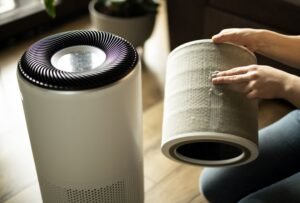
Air purifiers use filters or other technologies to remove particles from the air. Many residential systems use high-efficiency filters that capture small airborne particles as air passes through the unit.
Depending on the type of purifier, it may help capture:
- Dust particles
- Pollen
- Pet dander
- Mold spores
- Smoke particles
- Other airborne contaminants
A purifier works best when it is correctly sized for the room or HVAC system and maintained according to the manufacturer’s recommendations.
Can Air Purifiers Help With Dust?
Yes. Air purifiers can capture airborne dust particles before they settle on floors, furniture, and other surfaces.
However, not all household dust remains airborne. Once dust settles, an air purifier cannot remove it from your furniture or floors. Regular vacuuming, dusting, and cleaning are still necessary.
Your HVAC filter also plays an important role. A dirty or inadequate filter can allow more particles to circulate through your home and may restrict airflow.
Do Air Purifiers Help With Allergies?
Air purifiers may help reduce airborne allergens such as pollen and pet dander. This can be particularly useful during periods when outdoor allergens enter your home or when indoor sources contribute to poor air quality.
If allergies are a concern, consider the complete indoor environment rather than relying on an air purifier alone. Proper HVAC maintenance, effective filtration, humidity control, and regular cleaning can all contribute to better indoor air quality.
Your HVAC System Also Affects Indoor Air Quality
Your heating and cooling system continuously circulates air throughout your home. That means the condition of your HVAC system can affect how much dust and debris moves through your living spaces.
For example, clogged filters, dirty components, or leaking ductwork can contribute to poor airflow and inefficient filtration.
This is one reason homeowners researching the best HVAC system for Texas climate should consider indoor air quality as well as heating and cooling performance.
Air Purifiers vs. HVAC Filters
An HVAC filter and an air purifier aren’t necessarily competing products.
Your HVAC filter protects the equipment and helps remove particles from air moving through the system. A dedicated air purifier can provide additional filtration, depending on its design and efficiency.
If you’re considering an HVAC upgrade, understanding the heat pump vs central AC difference can also help you evaluate your home’s overall heating, cooling, filtration, and comfort needs.
For homeowners researching heat pump vs AC in Texas, indoor air quality should be considered alongside cooling efficiency and heating requirements.
What About Heat Pumps and Indoor Air Quality?
A heat pump can provide both heating and cooling, which makes it an option some homeowners consider when replacing an aging HVAC system.
If you’re asking is a heat pump worth it in Texas, the answer depends on factors such as your home’s size, insulation, heating requirements, equipment efficiency, installation costs, and energy usage.
Similarly, questions such as are heat pumps good in Texas and heat pump for Texas climate require looking at the entire HVAC system rather than focusing on one feature.
A properly installed and maintained HVAC system can work alongside effective filtration to support comfortable indoor conditions.
Consider Energy Costs When Choosing HVAC Equipment
Indoor air quality isn’t the only consideration when replacing an HVAC system. Energy efficiency and operating costs matter too.
Homeowners comparing systems may research heat pump vs AC cost, heat pump cost Texas, or central AC replacement cost Texas before deciding what equipment to install.
If you’re considering a heat pump, researching heat pump installation cost Texas can help you understand the initial investment.
You may also want to investigate heat pump energy efficiency Texas and heat pump electricity usage Texas when comparing long-term operating expenses.
Understanding the heat pump benefits in Texas can help homeowners determine whether the technology fits their specific property.
Can a Heat Pump Improve Indoor Air Quality?
A heat pump itself isn’t an air purifier. Its primary job is heating and cooling your home.
However, the HVAC system can be designed with compatible filtration and indoor air-quality equipment. Depending on the installation, homeowners may combine their heating and cooling system with upgraded filtration or dedicated air-cleaning equipment.
If you’re considering heat pump cooling Texas, make sure your system is correctly sized and installed. Proper airflow is important for both comfort and effective filtration.
What Are the Pros and Cons of Different HVAC Systems?
There isn’t one system that is ideal for every home.
When researching heat pump pros and cons Texas, consider heating and cooling needs, installation requirements, operating costs, maintenance, and your home’s existing infrastructure.
Homeowners comparing central AC vs heat pump energy efficiency should also consider how much heating their home requires during cooler months.
For an existing system approaching the end of its lifespan, researching heat pump replacement Texas may provide another option to discuss with an HVAC professional.
Other Ways to Reduce Dust and Allergens
An air purifier is only one part of an effective indoor air-quality strategy.
Try these additional steps:
Change HVAC Filters Regularly
Replace filters according to the manufacturer’s recommendations. Homes with pets or higher dust levels may require more frequent replacement.
Clean and Vacuum Regularly
Use a vacuum with effective filtration and regularly clean carpets, rugs, upholstery, and other surfaces where dust can accumulate.
Keep Ductwork Clean and Sealed
Damaged or leaking ductwork can allow unwanted particles into the air distribution system. Professional inspection can help identify potential problems.
Control Indoor Humidity
Excessive humidity can contribute to an environment where certain indoor contaminants thrive. Maintaining appropriate indoor humidity can improve overall comfort.
Schedule Professional HVAC Maintenance
Regular HVAC service can help identify airflow, filtration, and equipment problems before they become bigger issues.
When Should You Call an HVAC Professional?
Consider professional HVAC service if you notice:
- Excessive dust shortly after cleaning
- Weak airflow from vents
- Unusual odors
- Frequent filter clogging
- Uneven temperatures
- Excessive humidity
- An aging HVAC system
- Rising energy bills
An HVAC professional can inspect your system and determine whether the problem is related to filtration, ductwork, airflow, equipment performance, or another issue.
Final Thoughts
So, do air purifiers help with dust and allergies? They can. A properly selected and maintained air purifier can reduce certain airborne particles, but it works best as part of a broader indoor air-quality strategy.
Your HVAC filter, ductwork, ventilation, humidity levels, cleaning habits, and equipment condition all play important roles.
If you’re dealing with excessive dust or poor indoor air quality, Chrome Air Conditioning can help evaluate your HVAC system and discuss options for improving comfort and air circulation in your Dallas-area home.
Frequently Asked Questions
Do air purifiers remove household dust?
They can capture airborne dust particles, but they cannot remove dust that has already settled on furniture, floors, or other surfaces.
Are air purifiers good for allergies?
They may help reduce airborne allergens such as pollen and pet dander. Results depend on the purifier, room size, filter, and sources of allergens.
Should I use an air purifier with my HVAC system?
In some homes, an additional air-cleaning system can complement the HVAC filter. An HVAC professional can help determine which option fits your system.
How often should I change my HVAC filter?
The appropriate interval depends on the filter, HVAC system, home conditions, pets, and indoor air quality. Follow the manufacturer’s recommendations and inspect the filter regularly.
Can my HVAC system cause excess dust?
Poor filtration, restricted airflow, dirty components, or ductwork problems can contribute to indoor air-quality issues. A professional inspection can help identify the cause.