Do HVAC UV Lights Really Work? Benefits and Limitations
If you’re looking for ways to improve indoor air quality Texas homeowners deal with year-round, you may have heard about UV lights for HVAC systems. These systems use ultraviolet-C (UV-C) light inside or near the HVAC equipment to help control certain microorganisms that pass through or grow on surfaces.
But do HVAC UV lights really work? They can be useful in the right application, but they are not a complete solution for every indoor air quality problem.
In this guide, Chrome Air Conditioning explains how HVAC UV lights work, their potential benefits, their limitations, and how they compare with other indoor air quality solutions.
What Are HVAC UV Lights?
HVAC UV lights are designed to use UV-C radiation to help reduce certain microorganisms exposed to the light. Depending on the system’s placement, UV lights may be installed near the indoor coil, inside the air handler, or in the return or supply air path.
A properly installed UV system can complement your existing air filtration system for home and HVAC equipment. However, UV light is not designed to replace regular filter changes, professional maintenance, or proper ventilation.
Do HVAC UV Lights Really Work?
Yes, HVAC UV lights can work under the right conditions. Their effectiveness depends on factors such as UV intensity, exposure time, installation location, airflow, and how well the system is maintained.
UV light generally has a greater opportunity to affect microorganisms when they remain exposed to the light for sufficient time. A fast-moving particle that passes through a UV-lit air stream may receive much less exposure than an organism growing on a surface close to the lamp.
This is why UV technology should be viewed as one part of a broader HVAC air quality strategy rather than a standalone solution.
Potential Benefits of HVAC UV Lights
1. Helps Support Cleaner HVAC Components
Moisture around an indoor evaporator coil can create conditions where biological growth may occur. A properly positioned UV-C system can help reduce microbial growth on surfaces exposed to the light.
Keeping HVAC components cleaner can also support efficient system operation.
2. Can Complement Air Filtration
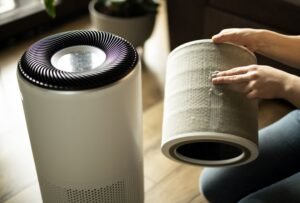
A filter and UV light perform different jobs. Your filter physically captures airborne particles, while UV-C is intended to affect certain microorganisms exposed to the radiation.
For homeowners comparing the best HVAC filter for indoor air quality, UV lighting can be considered an additional layer rather than a replacement for filtration.
For example, many homeowners consider MERV 13 filter for home applications when their HVAC system can accommodate that level of filtration without restricting airflow excessively. The correct filter depends on the equipment and system design.
3. May Help With Certain Indoor Air Concerns
Texas homes can experience dust, pollen, outdoor pollutants, and high humidity. These factors make indoor air quality in Texas homes an important consideration.
However, UV lights are not designed to remove every type of pollutant. They should be combined with appropriate filtration, humidity management, ventilation, and source control.
4. Can Be Part of a Whole-Home Air Quality Strategy
A whole house air purifier Texas homeowners choose may address airborne particles through filtration or other technologies, while UV lighting serves a different purpose.
Similarly, a whole house dehumidifier Texas homeowners install can help manage excess indoor moisture. Controlling humidity is particularly important when trying to maintain comfortable indoor conditions.
What HVAC UV Lights Don’t Do
Understanding the limitations is just as important as understanding the benefits.
UV Lights Don’t Remove Dust
If you’re searching for how to reduce dust in your home, installing UV lights alone won’t solve the problem.
Dust control usually requires proper filtration, regular cleaning, sealing of air leaks, and appropriate HVAC maintenance.
UV Lights Don’t Replace Air Filters
Your HVAC filter remains an important part of your home’s air-cleaning strategy. A UV lamp cannot physically capture dust, pollen, pet dander, or other particles in the same way a properly selected filter can.
Continue replacing or cleaning your filter according to the manufacturer’s recommendations.
UV Lights Don’t Automatically Solve Humidity Problems
High humidity is a common concern in warm climates. If you’re researching how to reduce indoor humidity in Texas, a UV light isn’t the primary solution.
Depending on the home, humidity may be managed through properly sized air conditioning, ventilation, or dedicated dehumidification equipment.
UV Lights Aren’t a Complete Mold Solution
UV-C may help address certain microorganisms exposed directly to the light, but it shouldn’t be treated as a complete solution for an existing moisture or mold problem.
If you have a significant moisture issue, the underlying source needs to be identified and corrected.
UV Lights vs. Air Purifiers
When comparing best air purifier for home Texas options, remember that air purifiers and HVAC UV lights may address different concerns.
An air purifier or whole-home filtration system can be designed to capture airborne particles. UV-C systems, on the other hand, rely on ultraviolet radiation and exposure to affect certain microorganisms.
Some homeowners may benefit from combining technologies. The right combination depends on the home’s HVAC system, indoor conditions, occupants, and specific air-quality concerns.
Can UV Lights Help With Allergies?
Homeowners researching indoor air quality and allergies should understand that UV lights aren’t primarily particle filters.
Allergens such as pollen and dust mites are particles, so effective filtration and source control are generally important considerations. A properly selected HVAC filter or air-cleaning system may therefore play a more direct role in reducing airborne particles.
UV lighting can potentially complement these measures rather than replace them.
What About Air Duct Cleaning?
Another common question involves air duct cleaning indoor air quality.
Cleaning may be appropriate when ducts have significant contamination or other specific problems, but duct cleaning isn’t automatically necessary for every home. Before paying for a service, homeowners should determine whether there is an actual issue that cleaning can address.
Likewise, UV lights shouldn’t be installed simply because they’re marketed as a universal solution.
UV Air Purifier HVAC Systems: Are They Worth It?
A UV air purifier HVAC system may be worth considering when you want an additional layer of HVAC-based air treatment and your system is suitable for installation.
The value depends on your home’s conditions and what you’re trying to accomplish. If your main problem is dust, filtration may be more important. If humidity is the concern, humidity control may be the better starting point.
For homeowners seeking indoor air quality solutions, a professional HVAC assessment can help identify the most appropriate combination of equipment and maintenance.
When Should You Consider HVAC UV Lights?
You may want to discuss UV-C technology with an HVAC professional if:
- Your home has ongoing indoor air-quality concerns.
- Your HVAC system has an indoor coil or air handler where UV installation is appropriate.
- You’re already maintaining your filters and HVAC equipment but want an additional air-quality measure.
- You want to combine UV technology with filtration.
- You’re considering professional indoor air quality HVAC services.
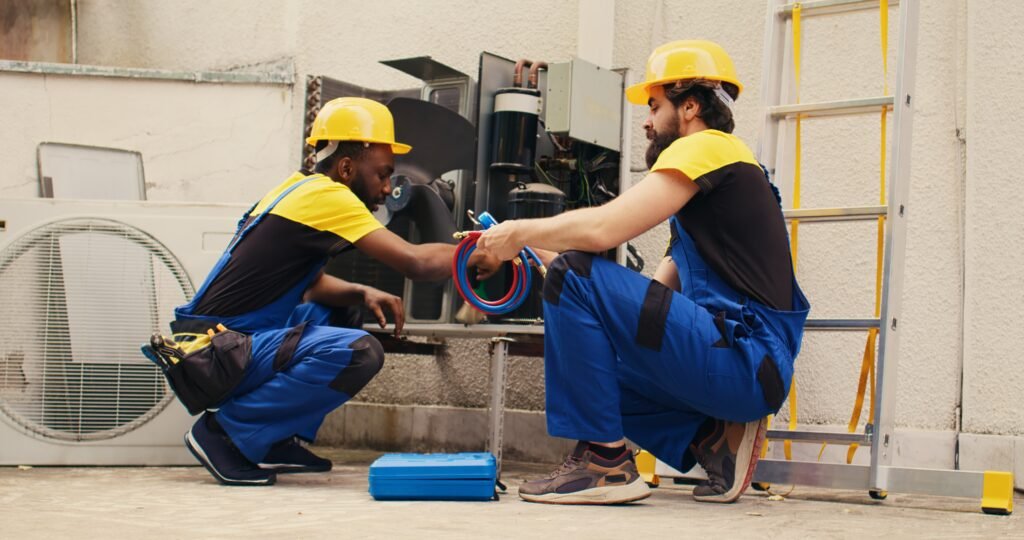
A professional can evaluate your equipment, available installation space, airflow, and specific concerns before recommending a system.
Final Thoughts
So, do HVAC UV lights really work? They can provide useful benefits when properly selected, installed, and maintained, but they aren’t a magic solution for every indoor air-quality problem.
For better results, consider UV lighting as part of a complete strategy that may include filtration, humidity control, ventilation, regular HVAC maintenance, and source control.
If you’re unsure which indoor air quality solutions are right for your home, Chrome Air Conditioning can help you evaluate your HVAC system and discuss practical options for improving comfort and air quality.
Chrome Air Conditioning | Plano, TX
If your home has persistent air-quality concerns, Chrome is here to help. Call 469-361-2700.
Frequently Asked Questions
Do HVAC UV lights really work?
Yes. Properly installed UV-C systems can help reduce certain microorganisms exposed to sufficient UV-C radiation. Their effectiveness depends on installation, exposure time, intensity, and maintenance.
Do UV lights replace HVAC filters?
No. UV lights and filters perform different functions. Continue using and replacing your HVAC filter according to the manufacturer’s recommendations.
Can UV lights remove dust from my home?
No. UV lights don’t physically capture dust. Proper filtration, cleaning, and controlling sources of dust are more appropriate approaches.
Are UV lights useful for Texas homes?
They can be, depending on the HVAC system and the home’s specific conditions. A professional evaluation can determine whether UV-C technology is appropriate.
How long do HVAC UV lights last?
The service life varies by lamp and manufacturer. UV output can decline over time even when a lamp still appears to be operating, so follow the manufacturer’s replacement recommendations.
Author: Chrome Heating & Air Conditioning | Plano, TX