Why Is My House So Dusty? (It Might Be Your Air Ducts) | Dallas TX
If you are constantly cleaning your home only to see dust return a few days later, your dusty house air ducts Dallas homeowners experience could be part of the problem. While dust can come from pets, carpets, clothing fibers, outdoor particles, and everyday household activity, your HVAC system also affects how particles move throughout your home. Dirty filters, poor airflow, or leaking ductwork can contribute to excessive dust circulation. At Chrome Air Conditioning, we help Dallas-area homeowners identify HVAC-related problems that may be affecting indoor comfort and air quality. Before assuming your cleaning routine is the problem, it is worth looking at your air conditioning system.
Why Is My House So Dusty?
A certain amount of household dust is normal. Dust can contain particles from skin cells, pet dander, hair, pollen, soil, fabrics, and other everyday materials.
However, if you notice that your home becomes dusty unusually quickly, there may be an underlying reason.
Common causes include:
- Dirty or poorly fitted HVAC filters
- Leaking or poorly sealed ductwork
- Poor ventilation
- Pet hair and dander
- Carpet and upholstery fibers
- Outdoor dust entering through doors and windows
- Excessive indoor activity
- Recent remodeling or construction
- HVAC airflow problems
This means that why is my house so dusty does not always have one simple answer. Your HVAC system may be contributing, but it is important to identify the actual source before paying for unnecessary services.
Can Dirty Air Ducts Cause Dust?
Your air ducts transport conditioned air throughout your home. Over time, ductwork can accumulate dust and debris, particularly if the system has experienced poor filtration, construction work, moisture problems, or other contamination.
However, visible dust in your home does not automatically prove that your ducts are dirty. The U.S. EPA notes that dirt inside ducts does not necessarily enter living spaces and does not recommend routine duct cleaning for every home.
That is why a professional evaluation can be more useful than automatically scheduling cleaning.
If your home has unusually heavy dust, it is worth checking the entire HVAC system—including filters, return-air pathways, accessible ductwork, and airflow—to determine what may be contributing to the problem.
Check Your HVAC Filter First
Your HVAC filter is one of the easiest things to inspect when your house is becoming dusty.
The filter is designed to capture airborne particles before air circulates through the system. When a filter becomes clogged, damaged, incorrectly installed, or does not fit properly, filtration may become less effective.
Check your filter regularly and follow your manufacturer’s recommendations for replacement.
Do not automatically assume that the highest-rated filter is best. A filter that is too restrictive for your particular HVAC system can affect airflow. The right filter should provide appropriate filtration without creating unnecessary resistance.
Look for Dust Around Your Air Vents
Are you noticing dust collecting around supply vents or return grilles?
That can be an important clue, although it does not necessarily mean the ducts themselves need cleaning. Air movement can cause particles to settle around registers, while dust may also come from nearby carpets, furniture, or other surfaces.
If you notice dust coming from air vents, inspect the filter and surrounding area first.
If dust returns unusually quickly or appears to be actively blowing from the vents, consider having an HVAC professional inspect the system.
Leaky Ductwork Can Affect Your Home
Duct leakage is another potential reason your home may become unusually dusty.
Ducts located in attics, crawlspaces, garages, or other areas can develop gaps or damaged connections. Depending on where the leak occurs, unwanted air and particles can potentially enter the system or conditioned air can escape.
Leaky ductwork can also contribute to inefficient HVAC operation. If certain rooms are consistently uncomfortable while others cool normally, ductwork may deserve closer attention.
Professional duct leak repair and duct sealing may be appropriate when leakage is confirmed.
Pets, Carpets, and Everyday Activity Also Create Dust
Before blaming your HVAC system, remember that your home itself creates dust.
Pets contribute hair and dander. Carpets and upholstered furniture can collect and release fibers. Bedding, clothing, paper products, and normal movement throughout the house also contribute to airborne particles.
Regular vacuuming, using appropriate filtration, cleaning bedding, grooming pets, and reducing outdoor debris entering through doors can all help reduce dust.
This is why how to get rid of dust in house is usually not solved by one single product or service.
Can HVAC Maintenance Help With Dust?
Regular HVAC maintenance can help keep your cooling system operating properly and provides an opportunity to identify issues affecting filtration and airflow.
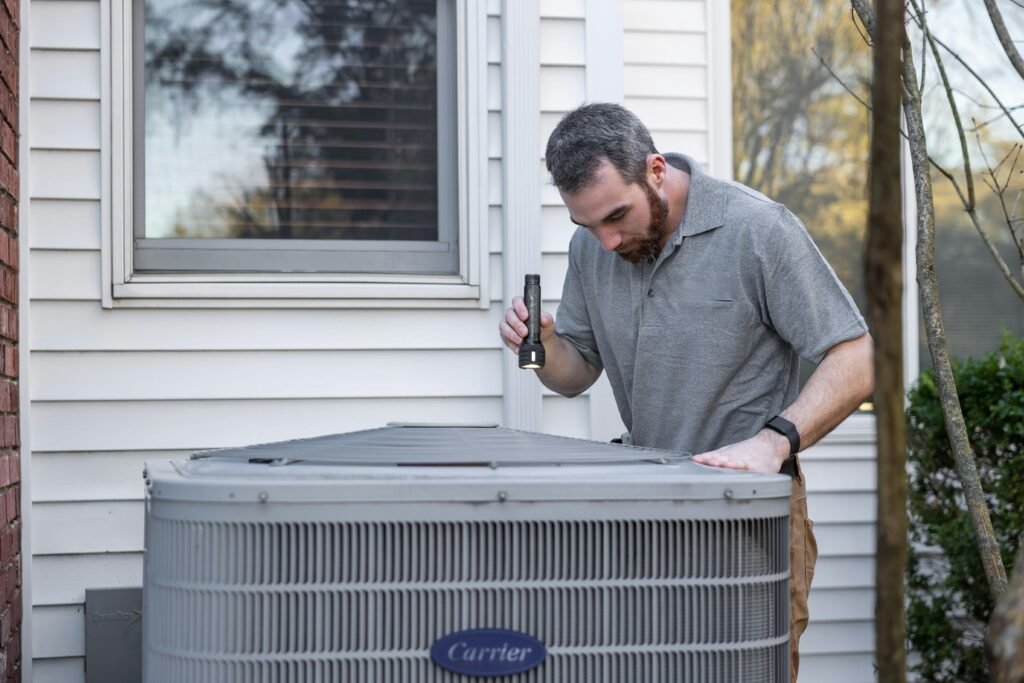
During professional service, a technician can inspect relevant components, evaluate airflow, examine filters, and identify potential problems.
If your system is old or has not been professionally inspected recently, maintenance may be a sensible first step before assuming you need extensive duct cleaning.
For homeowners searching for HVAC duct cleaning or air duct cleaning near me, it is worth determining whether cleaning, duct repair, filtration improvements, or another solution is actually appropriate.
When Should You Consider Air Duct Cleaning?
There is no universal rule that every home needs air duct cleaning on a fixed schedule. The EPA recommends considering the specific condition of the duct system rather than assuming routine cleaning is necessary.
Professional evaluation may be worthwhile if you notice:
- Significant visible debris inside accessible ductwork
- Unusual odors coming from the HVAC system
- Evidence of moisture or water damage
- Pest activity inside the duct system
- Excessive dust that persists despite normal cleaning
- Recent construction or remodeling
- Damaged or disconnected ductwork
If cleaning is recommended, ask the professional to explain exactly what they found and why the service is necessary.
How to Improve Indoor Air Quality
Reducing household dust is only one part of maintaining good indoor air quality.
You can start with simple steps:
- Replace HVAC filters as recommended
- Keep supply and return vents unobstructed
- Vacuum regularly
- Use doormats at entrances
- Keep pets groomed
- Clean bedding and upholstery
- Seal obvious gaps around doors and windows
- Maintain appropriate indoor humidity
- Schedule professional HVAC maintenance
For homes that need additional particle filtration, an air purification system may also be worth discussing with an HVAC professional. However, an air purifier should not be used as a substitute for addressing an underlying HVAC or ductwork problem.
Frequently Asked Questions
Can dirty air ducts make my house dusty?
They can contribute to dust circulation in certain situations, but a dusty home does not automatically mean the ductwork is the cause. Filters, duct leakage, pets, fabrics, outdoor particles, and household activity can all contribute.
How do I know if my air ducts need cleaning?
Look for unusual debris, odors, evidence of pests or moisture, or persistent dust problems. A professional inspection can help determine whether air duct cleaning is appropriate.
Why is there so much dust around my air vents?
Dust around vents can result from normal air movement, nearby surfaces, filtration problems, or other airflow conditions. If accumulation is unusually heavy or returns quickly, have your HVAC system evaluated.
Does duct cleaning improve indoor air quality?
Duct cleaning can remove accumulated debris when contamination is present, but it is not a universal solution for indoor air quality. The EPA recommends addressing specific problems rather than assuming every duct system requires routine cleaning. (US EPA)
How much does air duct cleaning cost?
Air duct cleaning cost varies depending on the size and configuration of the duct system, accessibility, level of contamination, and services required. Get a detailed estimate based on your home’s specific needs rather than relying on a generic price.
When to Call a Professional
If your house remains dusty despite regular cleaning, your AC has weak airflow, you notice unusual odors, or you see signs of damaged or leaking ductwork, it may be time for professional HVAC service.
A technician can evaluate the filter, airflow, accessible ductwork, and HVAC components to help determine whether the problem involves dust in air vents, duct leakage, filtration, or another source.
At Chrome Air Conditioning, we help Dallas-area homeowners investigate HVAC issues that can affect comfort and indoor air quality. Rather than automatically recommending a service, the goal should be to identify the source of the problem and determine the most appropriate solution.
Get Help With a Dusty Dallas Home
A dusty home can be frustrating, especially when you clean regularly and the dust quickly returns. While your air ducts may contribute, they are only one possible source.
Start with the basics: check your filter, improve household dust control, keep vents clear, and monitor your HVAC system. If the problem continues, professional evaluation can help determine whether you need air duct cleaning Dallas TX, duct sealing, repairs, maintenance, or another solution.
If your AC is circulating dust, producing unusual odors, or struggling with airflow, Chrome is here. Call 469-361-2700.
Chrome Heating & Air Conditioning | Plano, TX